THE BUSINESS OF INTERNATIONAL TRADE
THE BUSINESS OF INTERNATIONAL TRADE
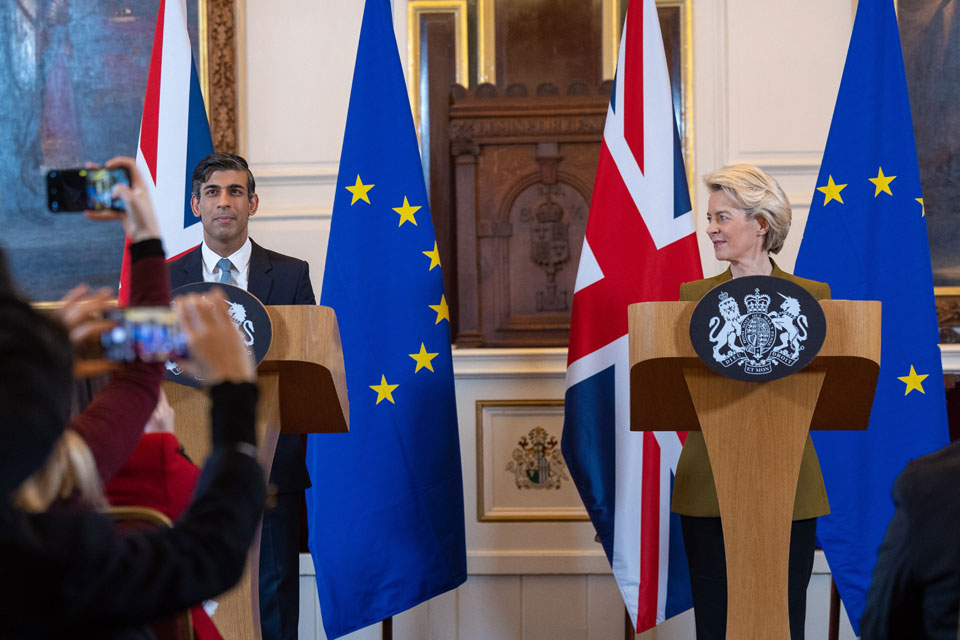
The Windsor Framework, announced February 27, is an agreement between the United Kingdom and the European Union aimed at removing the trade and constitutional problems caused by aspects of the Northern Ireland Protocol. This article describes the UK government’s view of the new agreement, and is followed by a PDF of the European Union’s explanation of the changes.
In its document explaining the new agreement, the UK government admits that: “The Northern Ireland Protocol has been the source of acute political, economic and societal difficulties in the two years since it has been operating. The prospect of rigorous implementation of the Protocol has been regarded by communities and businesses in Northern Ireland as unworkable without lasting economic and political damage. The Protocol has already led to significant disruption in the links between Great Britain and Northern Ireland that are integral to its place in our Union and the UK’s internal market. The Government recognises that the unionist community has felt that their aspirations, identity and economic rights under the Belfast (Good Friday) Agreement have been undermined, with the sense that the East-West dimension of that Agreement has been downgraded. Concerns have been raised about the implications of these arrangements for democratic governance and Northern Ireland’s place in our Union, in line with the specific provisions of the Acts of Union and the Belfast (Good Friday) Agreement. This has seen power-sharing collapse, and has undermined trade between Northern Ireland and what is by far its most important market.
It explains that the Windsor Framework fundamentally amends the text and provisions of the original Protocol to uphold Northern Ireland’s integral place in the United Kingdom, address the democratic deficit and set out a new way forward.
It recognises that by far the greatest portion of Northern Ireland’s economic life will continue to be based on trade within the United Kingdom. It claims that 1,700 pages of EU law - with its accompanying European Court of Justice (ECJ) jurisdiction – will be disapplied, meaning that core UK trade is based on core UK internal market rules, whether citizens and businesses “are based in Belfast or Birmingham”. This will ensure, for example, that the same UK food safety laws apply for retail goods moved into Northern Ireland; that VAT and excise rates apply UK-wide; and that medicines licensing will always be undertaken by the UK regulator for patients in Northern Ireland - without jeopardising access for Northern Ireland pharmaceutical firms to the EU market.
Three key areas have been addressed: restoring the smooth flow of trade within the UK internal market by removing the burdens that have disrupted East-West trade; safeguarding Northern Ireland’s place in the Union by addressing practical problems affecting the availability of goods from Great Britain, and the ability of Northern Ireland to benefit from UK-wide tax and spend policies; and addressing the democratic deficit that was otherwise at the heart of the old Protocol.
To restore the smooth flow of trade within the UK internal market, the new arrangements involve legal changes to remove red tape and checks for internal UK trade. While goods going to the EU will remain subject to full EU law checks and controls, bespoke arrangements, under a new UK internal market scheme, will scrap all unnecessary red tape for internal UK movements - including burdensome ‘third country’ processes such as officially-signed certificates for individual food products and customs declarations for consumer parcels. In their place will be new data-sharing arrangements to monitor and manage risks, with internal UK traders able to move goods without tariffs, on the basis of ordinary commercial information, and without physical checks unless there is a specific risk or intelligence basis, such as to prevent smuggling or other criminality.
Products that were banned, such as seed potatoes, sausages, and British trees, will be able to move again easily. Onerous requirements on pet travel have been removed. Plants and seeds for garden centres will move using the same arrangements as they do elsewhere within the UK internal market. VAT on energy-saving materials, such as solar panels and heat pumps, will be cut and changes to alcohol duties later this year will now be able to apply UK-wide, including the new draught relief for beer in pubs. And the government says that the deal secures a UK-wide regime for the approval and supply of medicines, removing any role for the European Medicines Agency and ensuring that medicines are available at the same time and on the same basis right across the United Kingdom.
To address the democratic deficit the government says that: “the agreement marks a definitive break from the legal and political framework that underpinned the old Protocol, with treaty change that provides a new underpinning of democratic oversight in line with the principles of the Belfast (Good Friday) Agreement. While the original Protocol ensured that any application of EU rules, and ECJ oversight, was subject to ongoing democratic consent, that was insufficient on its own to address concerns about the role of EU courts, as well as how to respect and protect the voice and interests of all communities in Northern Ireland. This agreement rectifies that by changing and rewriting the core dynamic alignment legal text as it stood in the old Protocol - entrenching democratic oversight and ending the prospect of damaging new goods rules being imposed on Northern Ireland.”
A future Northern Ireland Assembly will also have the ability to raise objections to new or amended EU goods rules that would have significant impacts on the lives of NI businesses and citizens. The UK government explains that “Once pulled, that Brake will give the UK Government the sovereign power to veto the new EU rule from ever applying in Northern Ireland. That veto can only be challenged through independent arbitration mechanisms, not the ECJ - removing the ultimate authority of the ECJ in areas in which it would affect day-to-day lives. The result is that EU laws will apply only where strictly necessary to provide privileged access to the whole of the EU market under a new legal framework of democratic consent and control.
Under the new agreement, the Government says it preserves its commitments to ensure Northern Ireland’s businesses have full unconditional and unfettered access to their most important market in Great Britain, while maintaining their privileged access to the whole of the EU market. But it also recognises the important responsibilities that come with that delicate balance, including the compromises made by the EU in respect to how it protects its internal market. Inherent in this new way forward is the prospect of significant divergence between the two distinct economies on the island of Ireland - from food and drink to plants and pets, building on the existing differences in every area of economic and political life such as services, migration, currency and taxation. This will require increased market surveillance North-South in some instances to ensure that there is no abuse of these arrangements to move goods across the international border from Northern Ireland into Ireland, and new requirements on Ireland and other EU Member States to ensure that sensitive products such as food are not moved illegally across that international border. The Government also recognises the separate responsibility to strengthen our own protections for the UK internal market - using the full remit of the Office for the Internal Market, and sharing trade data to ensure that it can monitor and provide assurance that future regulatory changes minimise trade diversion or the creation of new regulatory barriers within the UK internal market.
The agreement is believed to be the first time that the EU is disapplying rules fundamental to goods movements, and allowing future rules to be vetoed (following the Stormont Brake).
Some pro-Brexit Conservative MPs may not like the dropping of the Northern Ireland Protocol Bill introduced in June 2022. The government believes that the Bill is no longer necessary as the changes in the Framework will ensure that Northern Ireland’s place in the United Kingdom is fully respected. In tandem, the EU will no longer proceed with seven legal challenges it had brought against the UK in relation to the Protocol.
More detailed analysis of how the Windsor Framework will affect UK exporters and importers will follow in The Exporter magazine.
Click here to subscribe.
© The Exporter 2019-2024